Most of it you have been mowing, spraying, or pulling up and paying the council to take away.
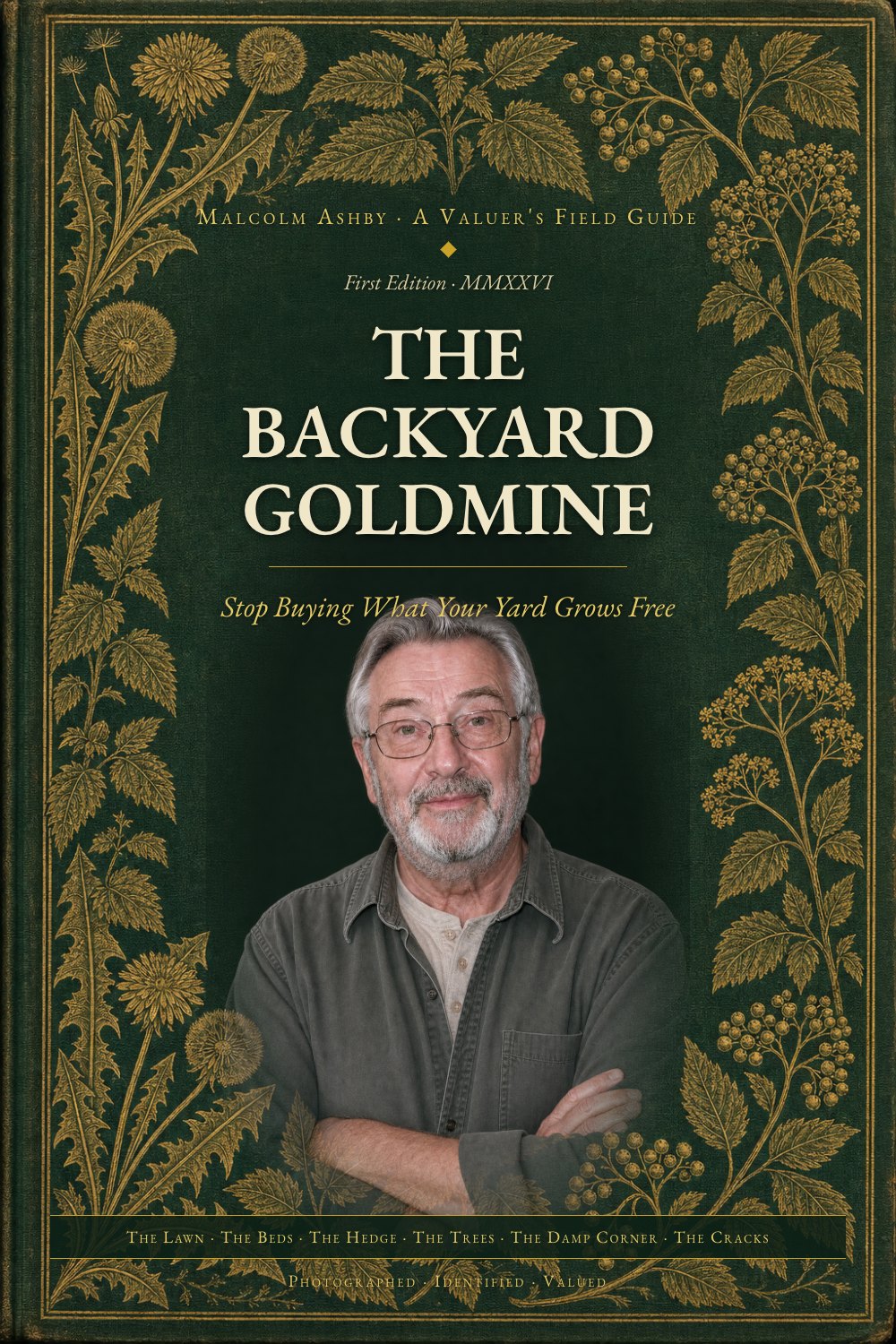
A digital field guide to the 84 most useful plants already growing in ordinary backyards. Each one photographed, identified, checked against its poisonous double, and given the one thing no other guide will give you. A value in dollars.

Dandelion coffee. Nettle soup. Elderberry syrup. The salve that grows flat against your path. 84 plants photographed, checked against their poisonous doubles, and given honest dollar values, with three indexes to find them by. Most gardens hold twenty to thirty of them. The by-value index tells you which ten to learn first.
I was an auctioneer and valuer for forty years. House clearances, mostly. I have stood in a thousand kitchens with a clipboard while a family waited to hear what the sideboard was worth.
Here is what forty years of that teaches you. People throw value away because nobody ever told them what it was.
The sideboard they nearly skipped goes for four hundred. The box of "old junk" under the stairs pays for the funeral. It happened every month of my working life. Not because people are careless. Because value is invisible until someone points at it.
The year I retired, I watched my neighbour come home from the pharmacy with a small paper bag. Elderberry syrup, for her chest. Eighteen dollars. We stood talking by her fence, and the whole time, over her shoulder, an elder tree at the bottom of her garden was holding about thirty dollars of the same berries at eye height.
She had lived in that house for thirty years. Nobody had ever pointed.
So I did what valuers do. I catalogued. Two years, my own half acre and every hedge and verge within walking distance, cross-checked against the old herbals and the prices at the health shop in town. I wrote down every plant an ordinary person can find in an ordinary backyard, what it is good for, when to take it, how not to poison yourself, and what the same thing costs when a shop puts it in a jar.
The catalogue became this book.
The Backyard Goldmine is a field guide to 84 plants. Not rare ones. Not ones you trek for. The ones coming up between your paving slabs and along your fence right now.
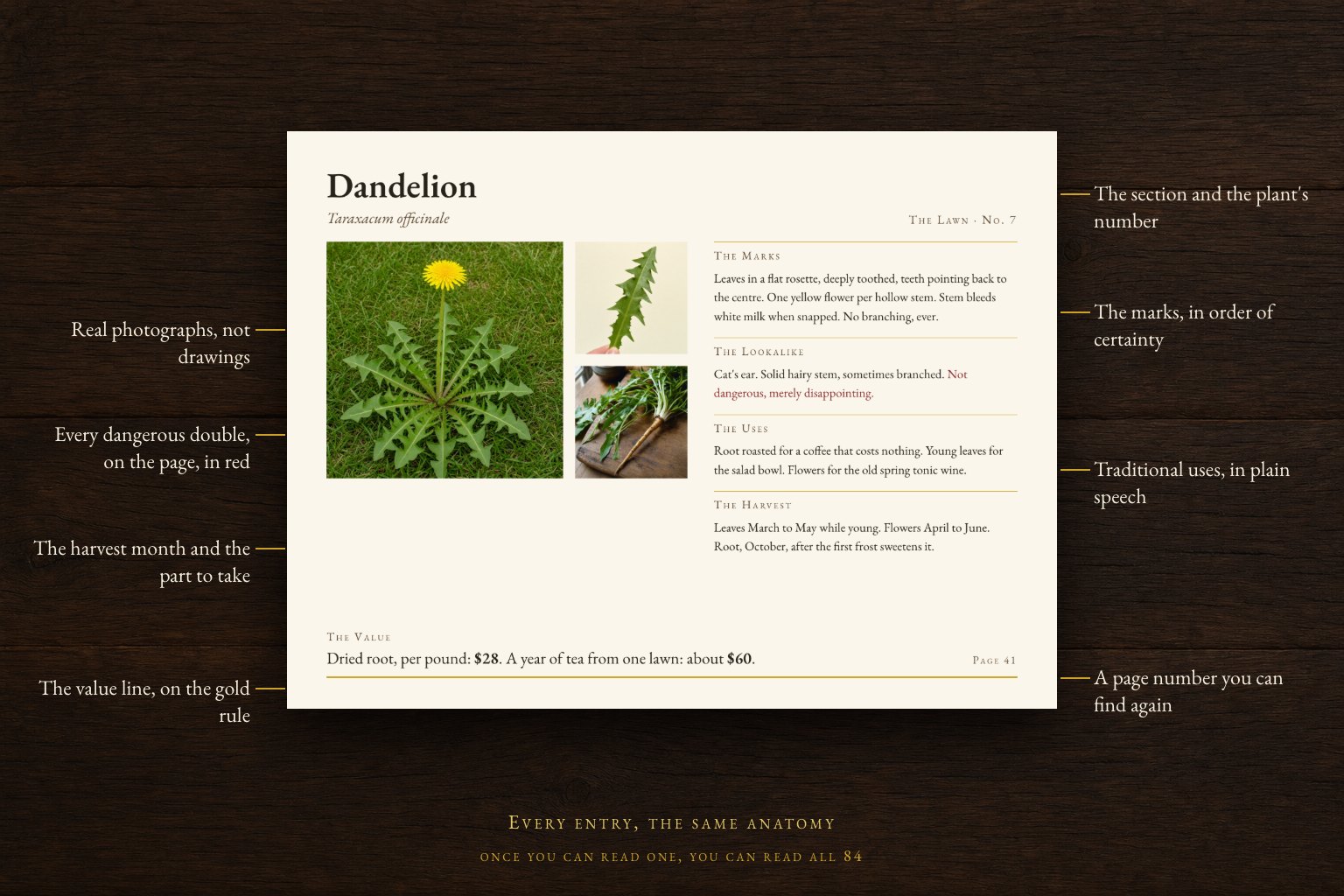
Every plant gets a full entry, laid out the same way every time, because a reference you cannot find your way around is a doorstop. Each entry gives you:
Before anything else, the safety of the thing.
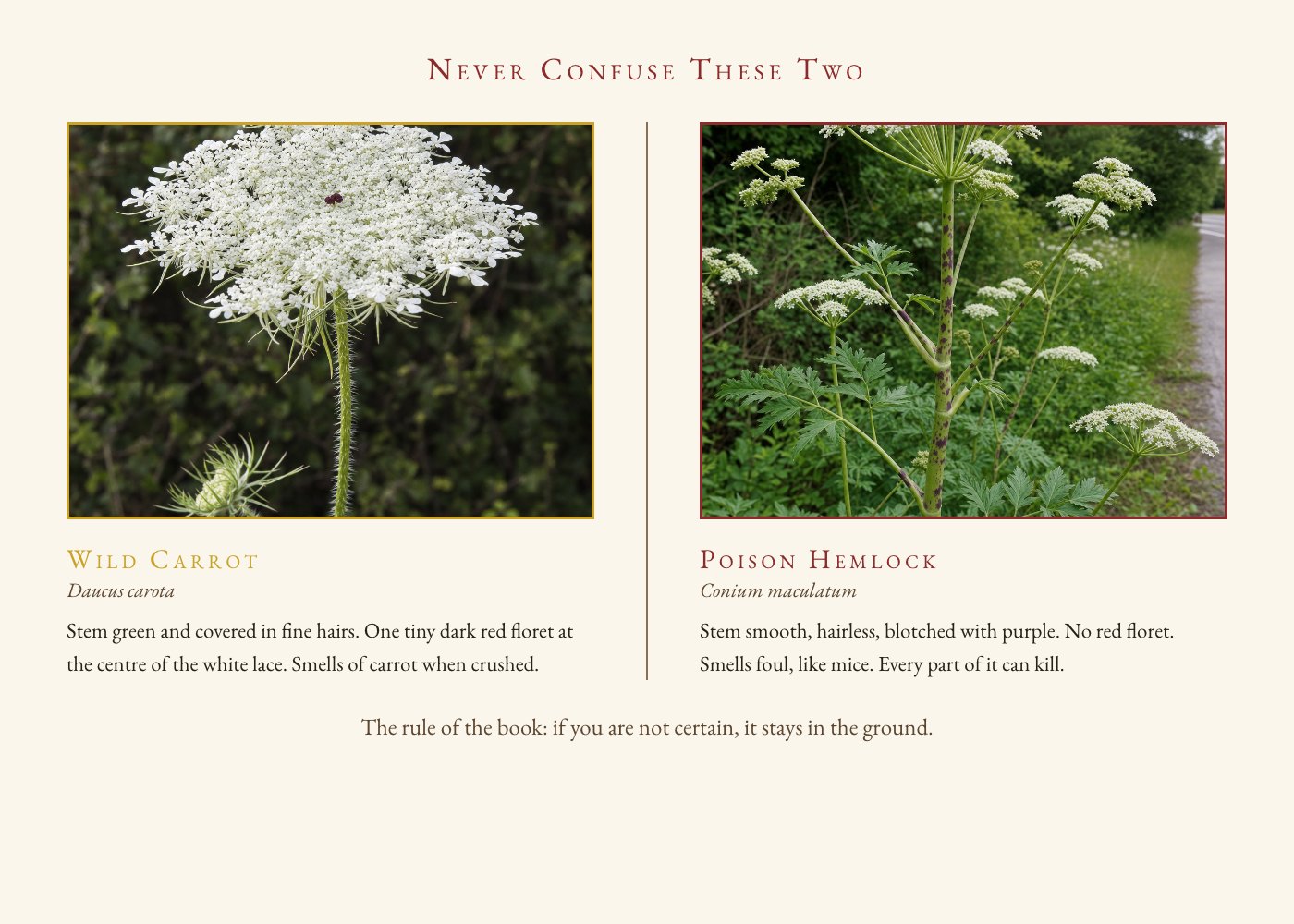
Some of the most useful plants in this book have doubles that can put you in hospital, and one or two that can do worse. Wild carrot has a double. Elder has a double. The onion smell test for wild garlic exists because the lookalike does not smell of onions and does not forgive.
Most guides handle this with a warning paragraph somewhere near the back. I think that is how accidents happen.
In this book, every plant with a dangerous double carries a lookalike panel on its own page. Two photographs, side by side. The safe plant on the left. The impostor on the right, in red. Under each, the marks that separate them, written for a person standing at a hedge with the book in one hand.
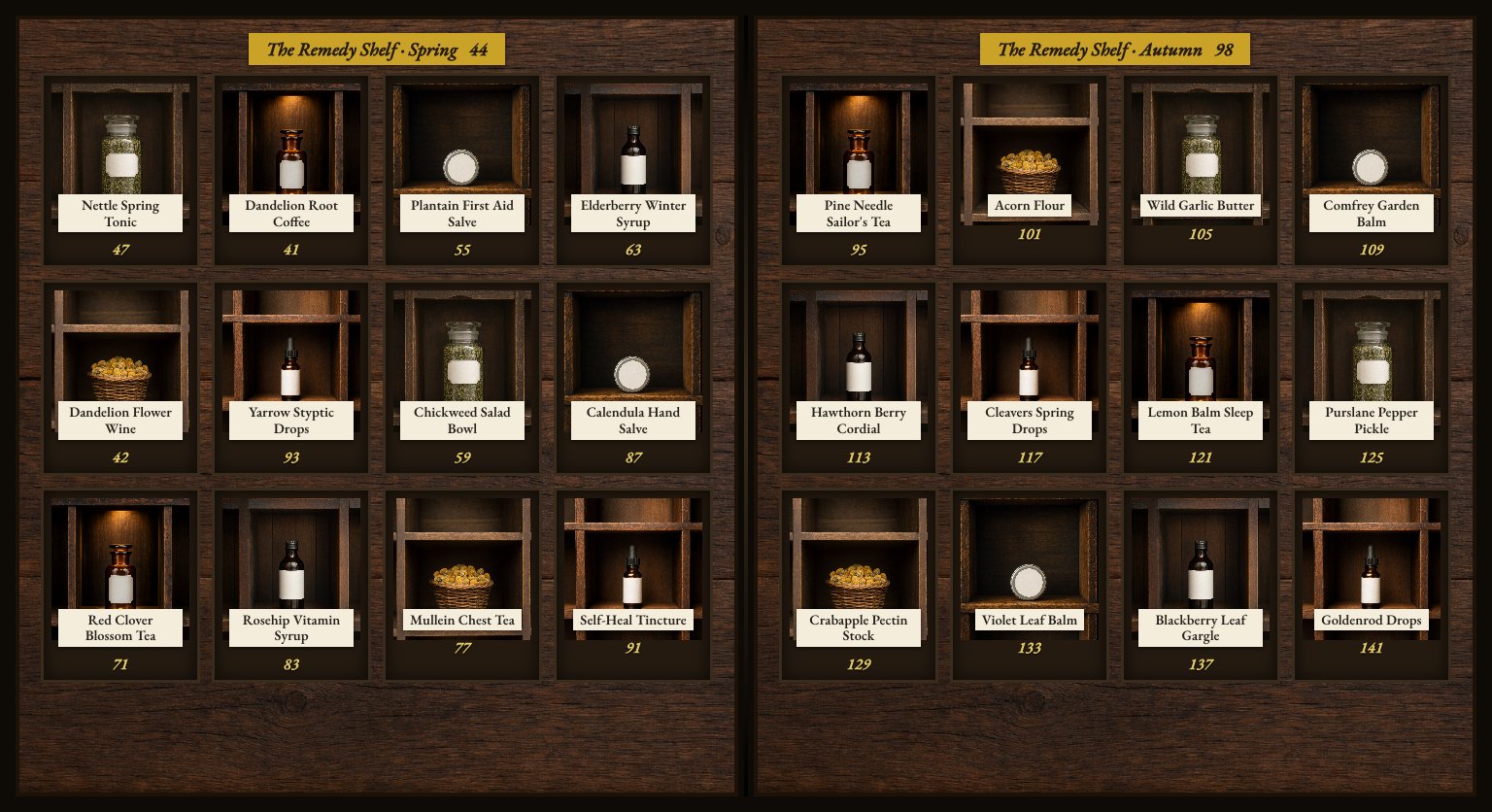
A sample of the 84, with the page they are on:
And 72 more, each one photographed, valued, and checked against its double.
Forty years of catalogues taught me that a reference book is only as good as the way in.
So this one has three.
I will be straight with you about what you are buying, because I spent my career next to men who were not.
This is a PDF. A digital book, 300 pages, full colour. Nothing arrives in the post. You download it the minute you pay, and it is yours forever.
Print the whole thing at the kitchen table, or just the twenty pages for the plants in your own garden. Put it in a ring binder. Take it to the hedge and get mud on it, and when it has had a hard season, print those pages again for pennies. Try that with a $40 hardback.
It reads perfectly well on an iPad or a computer if you would rather leave the printer out of it. One file. No apps, no accounts, no passwords beyond the shop you buy it from.
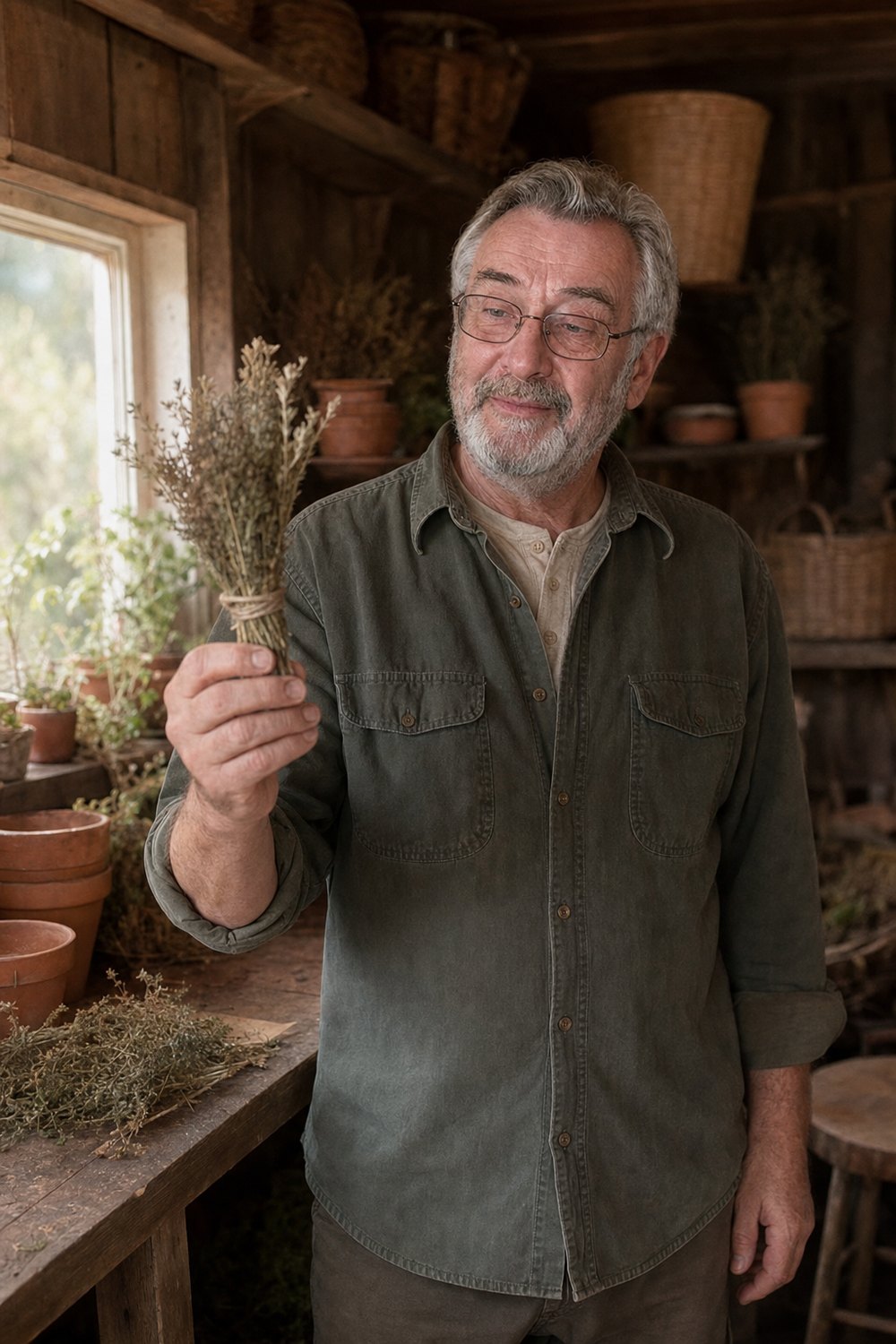
My name is Malcolm Ashby. I am sixty-eight. For forty years I was an auctioneer and valuer, the man in the tweed at estate sales, telling families what the contents of a house would fetch.
Valuing is a habit that does not retire when you do. I catalogue things. It is the only way I know how to look at the world. When I finally had time for my garden, I catalogued that too, and what I found there embarrassed me. A man who could price a Georgian side table across a dark room had been paying the health shop for dandelion root while treating his own supply with weedkiller.
My grandfather knew every plant in this book. He was not unusual. Everyone's grandfather did. Two generations later that knowledge is nearly gone, not because it stopped being true, but because nobody wrote it down where ordinary people would read it, with photographs, and prices, and the dangerous ones marked in red.
So I wrote it down. It took two years. It is the most useful thing I have ever put my name on.
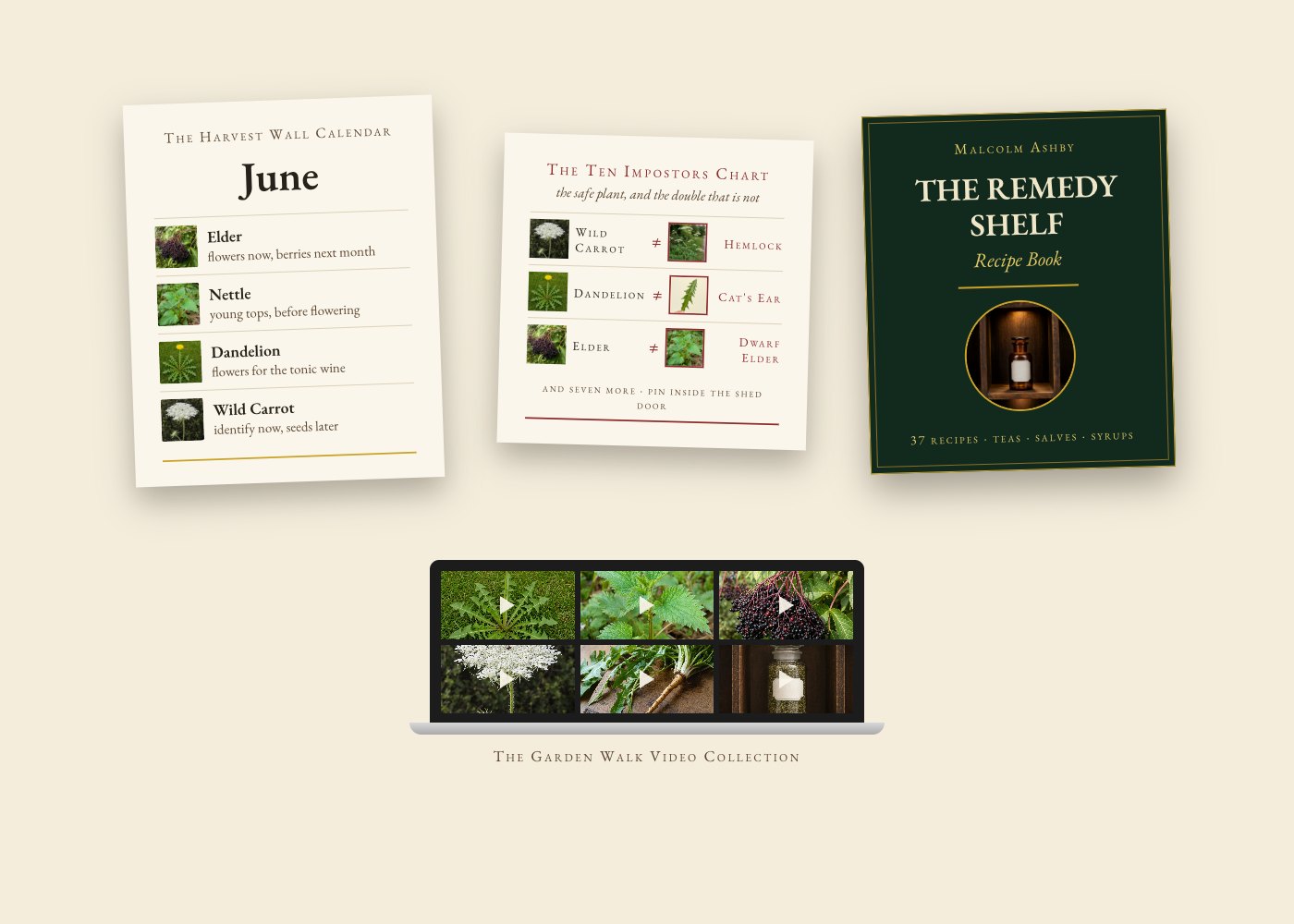
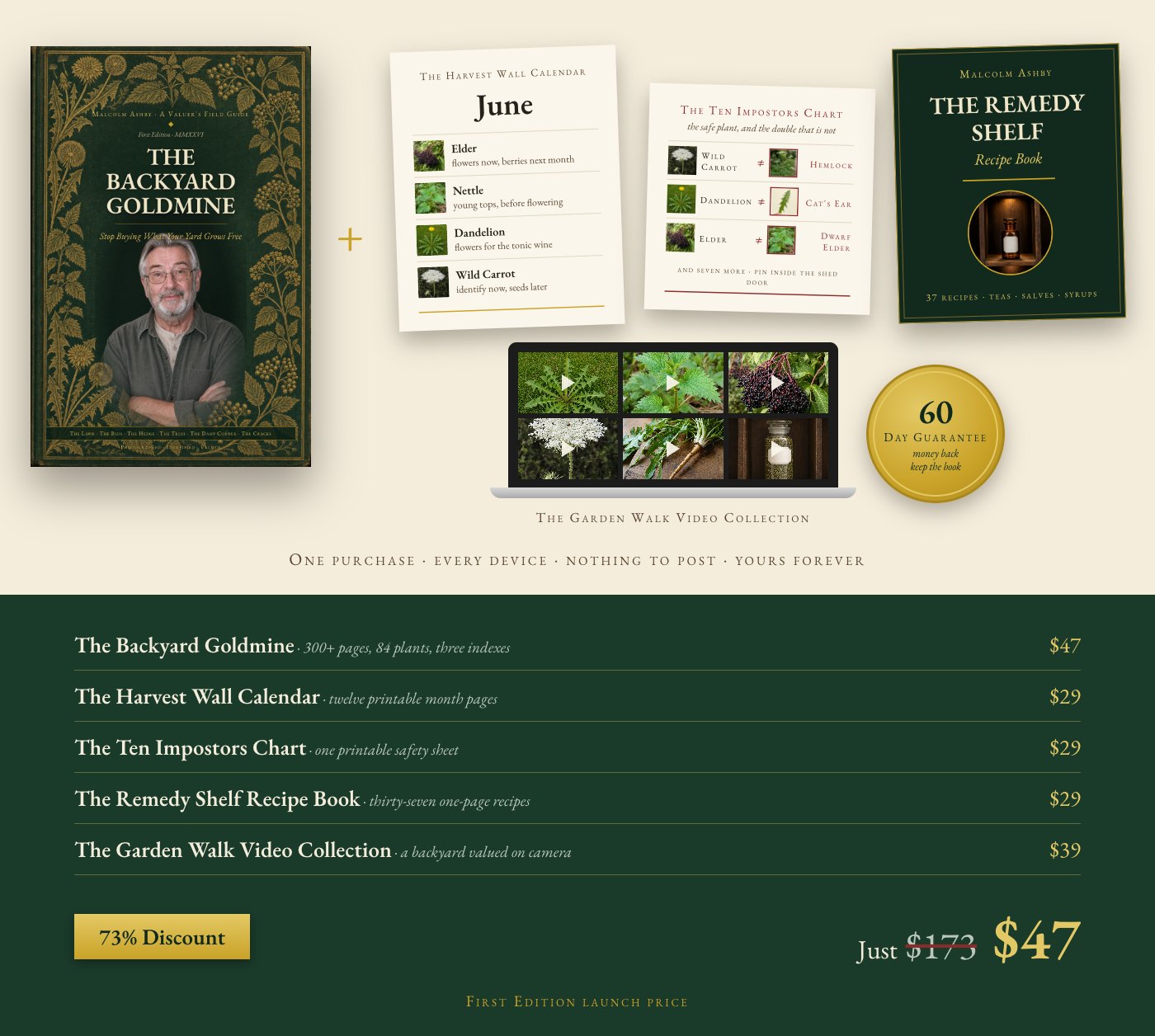
The Harvest Wall Calendar. Twelve printable pages, one per month, showing every plant in the book that is ready that month and which part to take. Pin it in the kitchen. It is the difference between a book you read once and a book you use all year. Printable at home. A $29 thing, free.
The Ten Impostors Chart. One printable sheet. The ten most dangerous lookalikes in the book, side by side with the safe plant they imitate, and the tell-apart marks in red. Pin it inside the shed door. Some people will get more from this one page than from the whole book, and I am at peace with that. A $29 thing, free.
The Remedy Shelf Recipe Book. Thirty-seven recipes from the book's plants, kept the way my grandmother kept hers. The tea, the salve, the syrup, the tonic wine. One page each: what to pick, what to add, how long it keeps. A $29 thing, free.
The Garden Walk Video Collection. I walk an ordinary suburban backyard and value it plant by plant, on camera, so you can watch the marks checked in moving pictures before you trust them at your own hedge. A $39 thing, free.
This is the First Edition. When it sells through, I will correct whatever needs correcting, add what readers ask for, and the Second Edition will cost more, because it will be worth more. That is the entire urgency of this page. I am a valuer, not a carnival. There is no clock ticking anywhere on it.
You have sixty days.
Read it, print it, take it to the hedge, try the nettle soup. If it is not what you hoped, write to me and you will have your money back the same day. No forms and no questions you would not ask a friend.
And you keep the book. I am not going to ask you to post me a PDF.
I can offer that because in forty years of sales I learned exactly what happens when you put an honest lot in front of the right person. It does not come back.
My whole working life, the saddest thing I saw was value going in the skip because nobody pointed at it in time. A garden is the same estate sale, running every year of your life, and most people never get a valuation.
This is yours. It costs less than the syrup and the salad and the tea you will buy this month anyway.
Go and have a proper look in that garden.
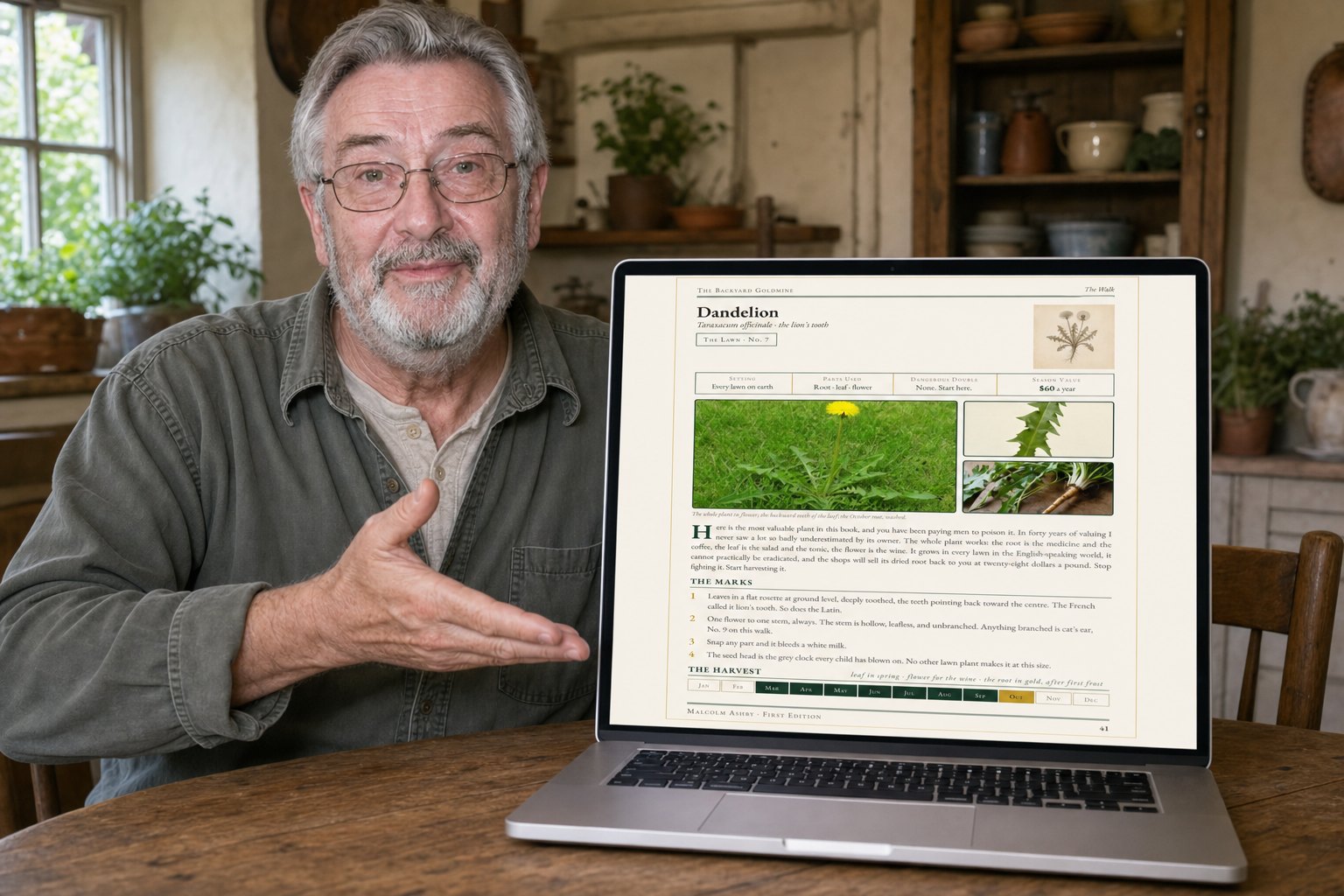
P.S. The dandelions you have been fighting all these years are on page 41. They were on your side the whole time.
The dandelions you mow are worth about $60 a year. The book is $47, once, and it values 83 more plants where that came from. Sixty days, money back, keep the book.